The best portable power stations depend on what you need to run, how long you need it powered, and how you plan to recharge. These picks range from lightweight travel units to larger home-backup systems, with differences in output, capacity, charging options, and included solar panels.
Quick Top Products
BLUETTI AC180
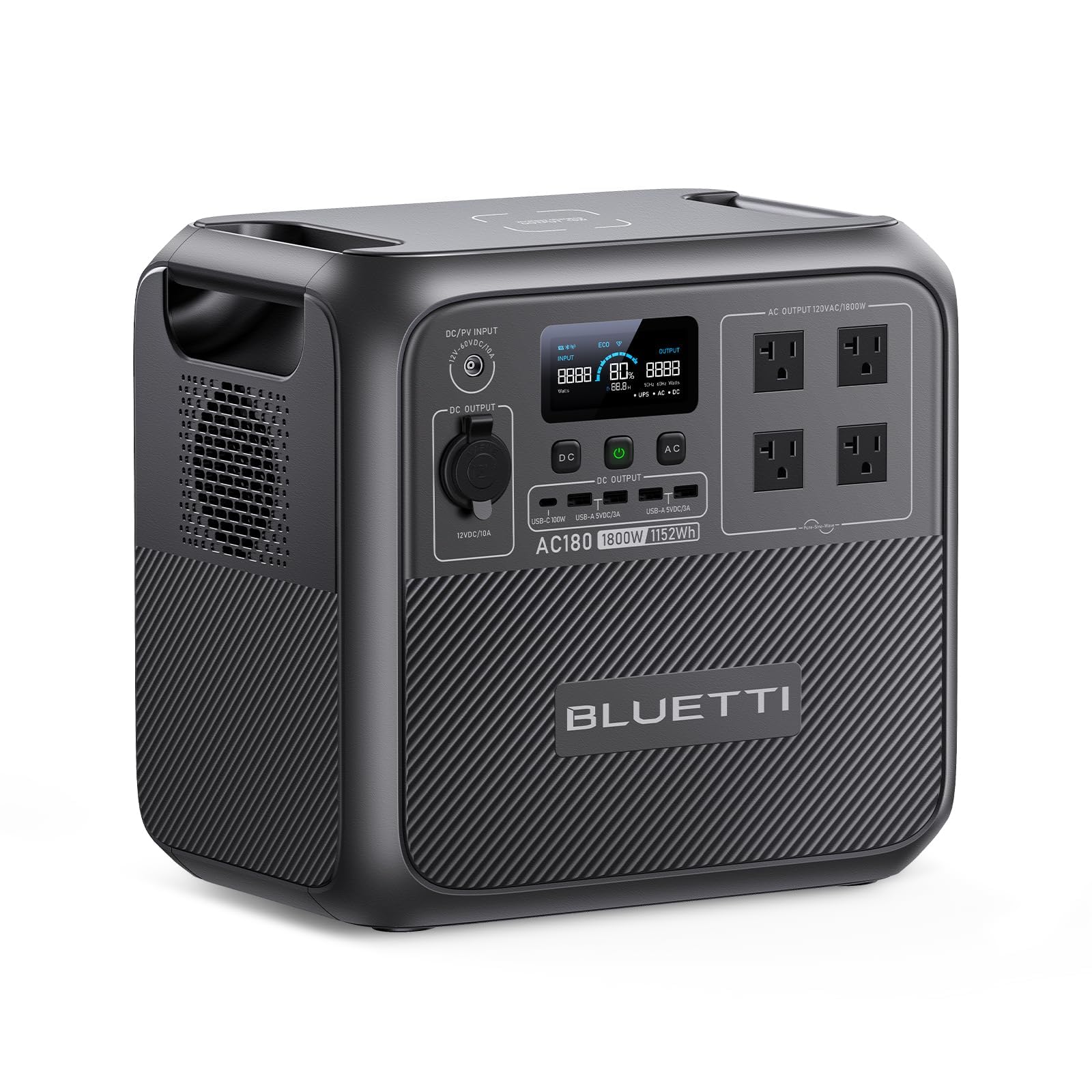
- 1,152Wh LiFePO4 battery and 1,800W output.
- App-enabled 2,700W boost and eight outlets.
- Supports AC and 500W solar charging.
Best For: Campers and households that want 1,152Wh capacity with 1,800W AC output.

BLUETTI Elite 100 V2
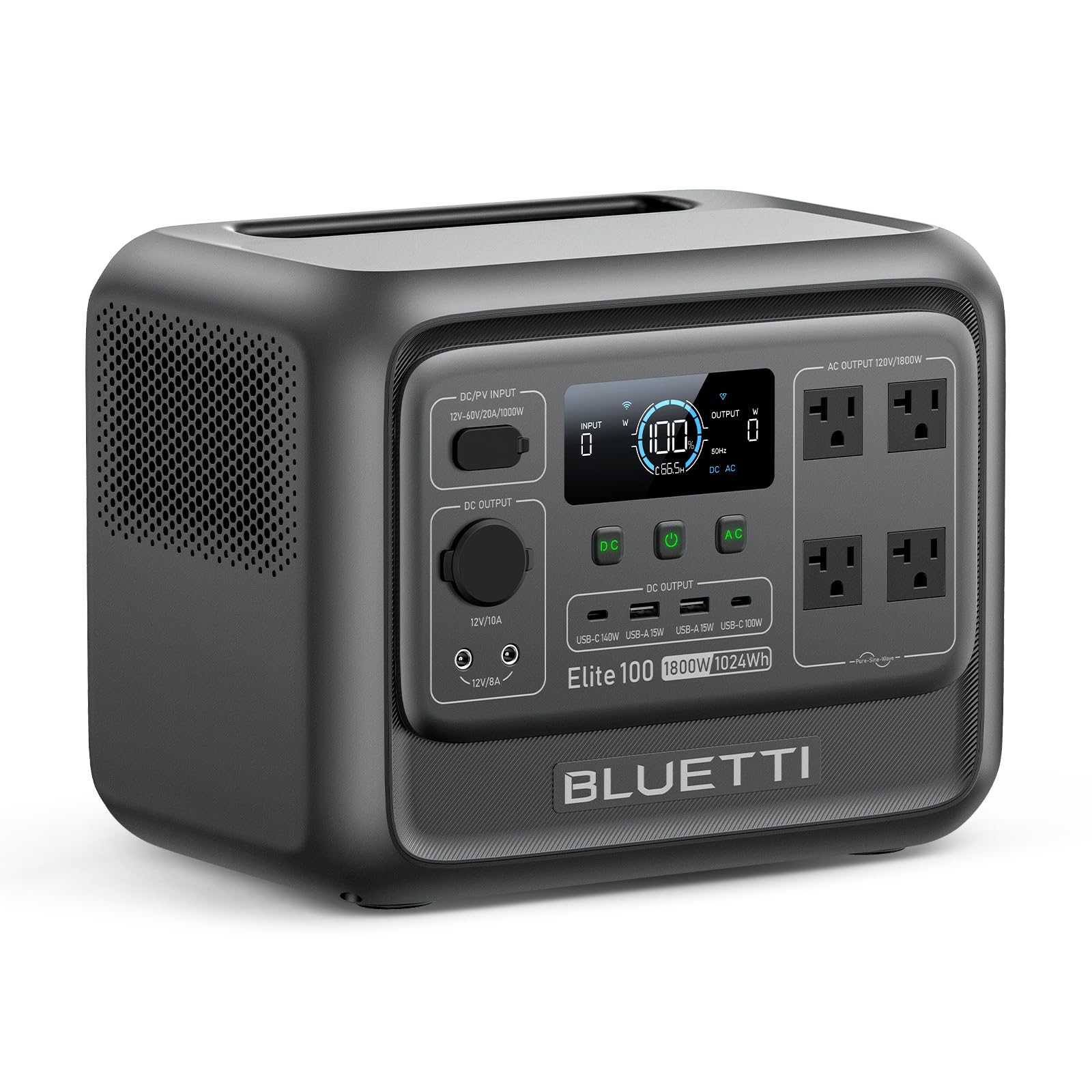
- 1,024Wh LiFePO4 battery and 1,800W rated output.
- 25 pounds, 17-liter design with 11 ports.
- 10ms UPS and 45-minute AC charge to 80%.
Best For: Campers who want about 1kWh of capacity in a 25-pound station with quiet operation.
EcoFlow DELTA 3 Classic
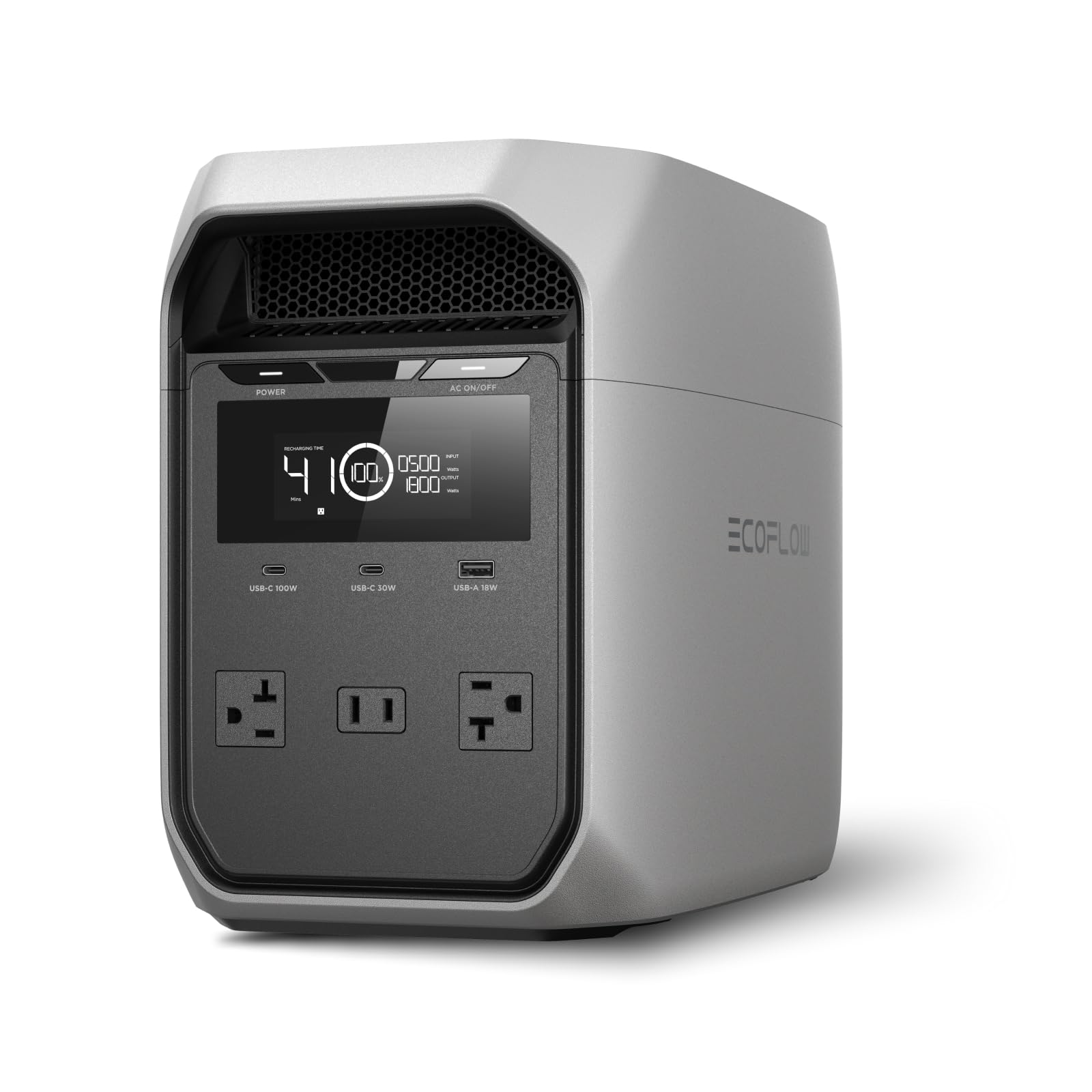
- 1,024Wh battery with 1,800W AC output and 3,600W surge.
- AC charging reaches 80% in 45 minutes.
- Under-10ms UPS, 100W USB-C, and app controls.
Best For: Users who want a 1,024Wh station with quick AC charging and app-managed backup modes.
EcoFlow DELTA 3 Max
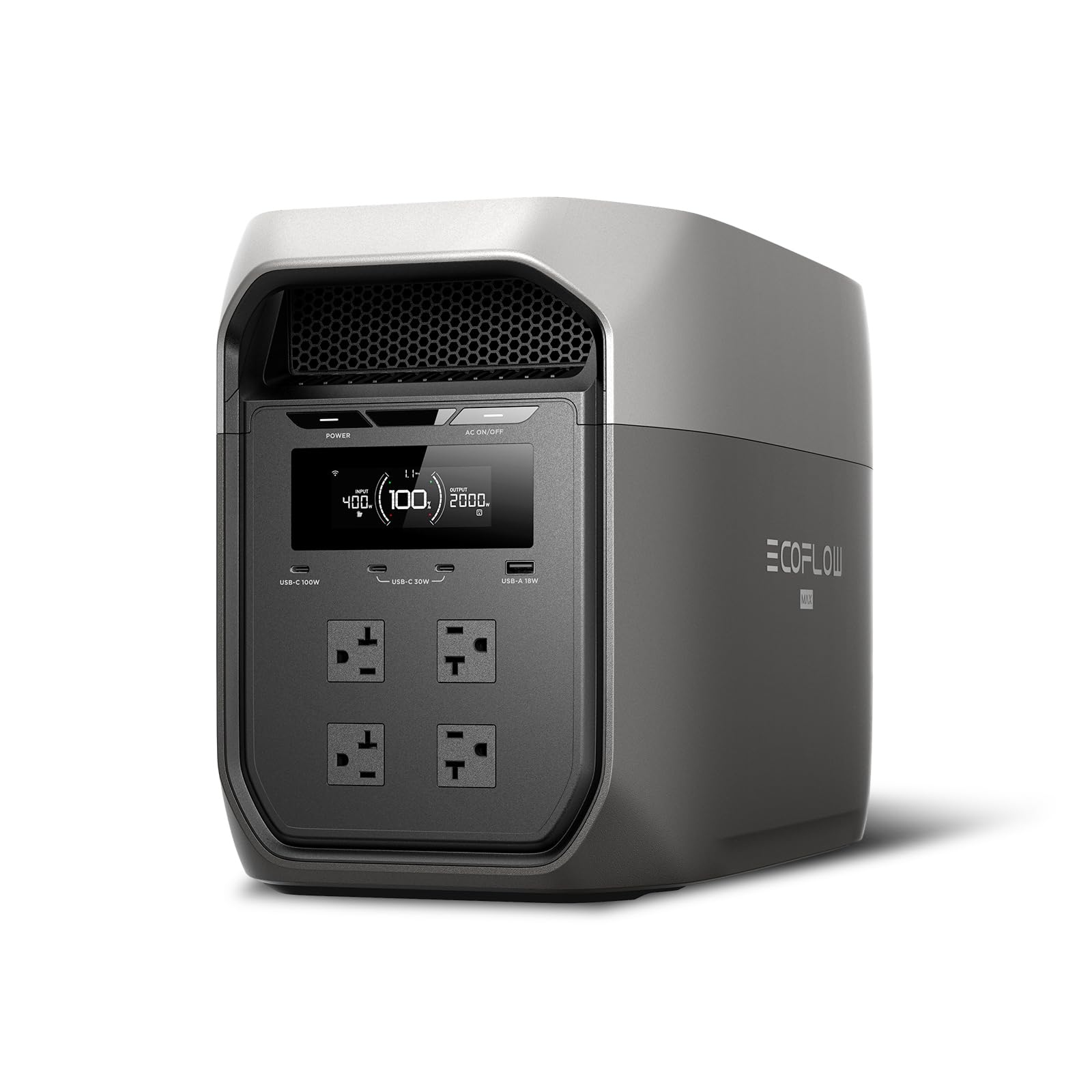
- 2,048Wh LiFePO4 battery for longer stored energy.
- Advertised 3,400W X-Boost output.
- 0–80% AC recharge in about 1.13 hours.
Best For: RV users and households who want a 2,048Wh station with rapid AC charging.
BLUETTI Elite 200 V2
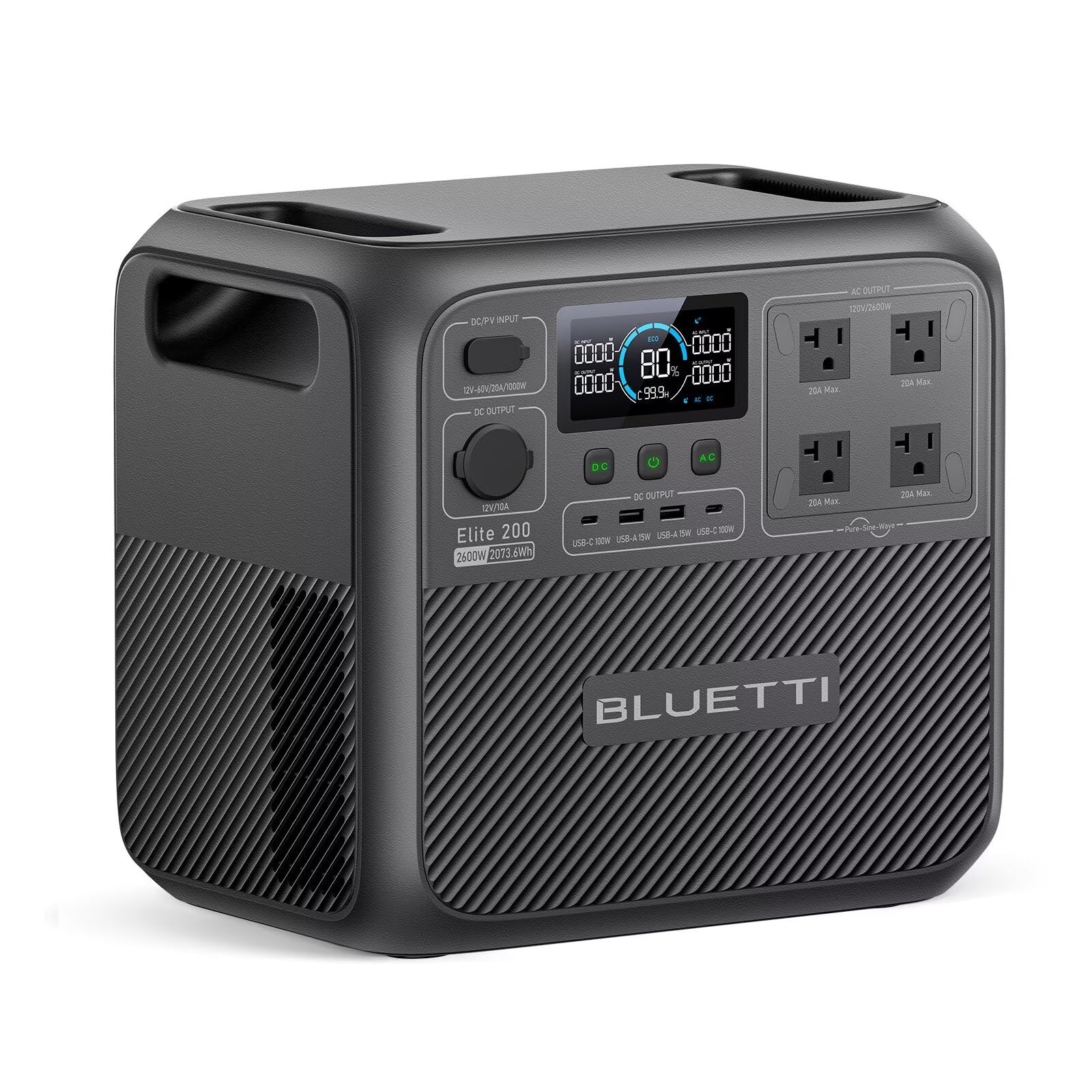
- 2,073.6Wh battery and 2,600W continuous AC output.
- 3,900W power-lifting mode and up to nine devices.
- Multiple charging modes, including 1,000W solar input.
Best For: Users who need a 2,073.6Wh station with 2,600W continuous AC output.
EcoFlow DELTA 3 Ultra
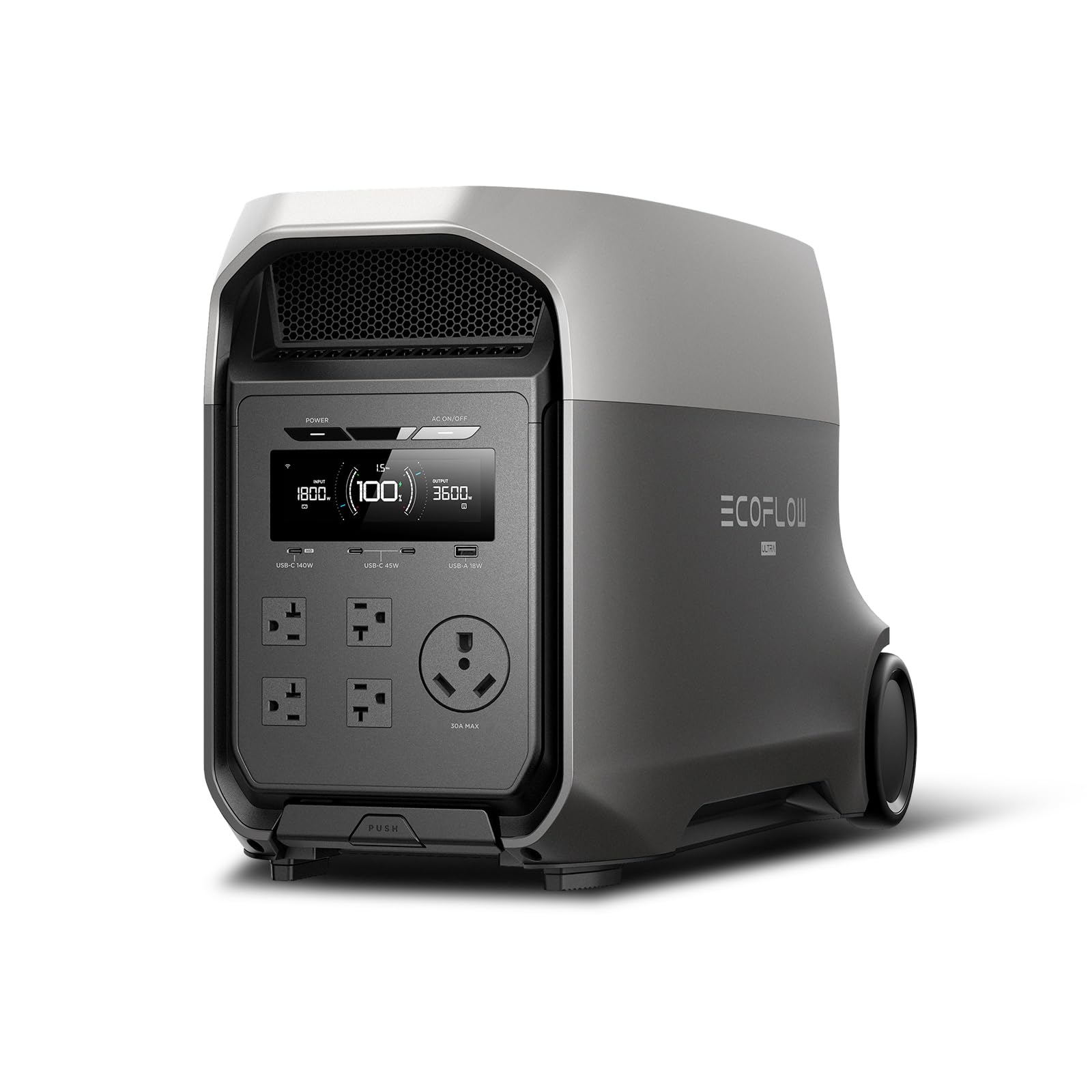
- 3,072Wh LiFePO4 battery with 3,600W continuous output.
- 7,200W surge and under-10ms UPS transfer.
- Four charging methods and 25dB under-load noise figure.
Best For: Households and RV users looking for a 3,072Wh battery and high AC output.
EcoFlow DELTA Pro Ultra
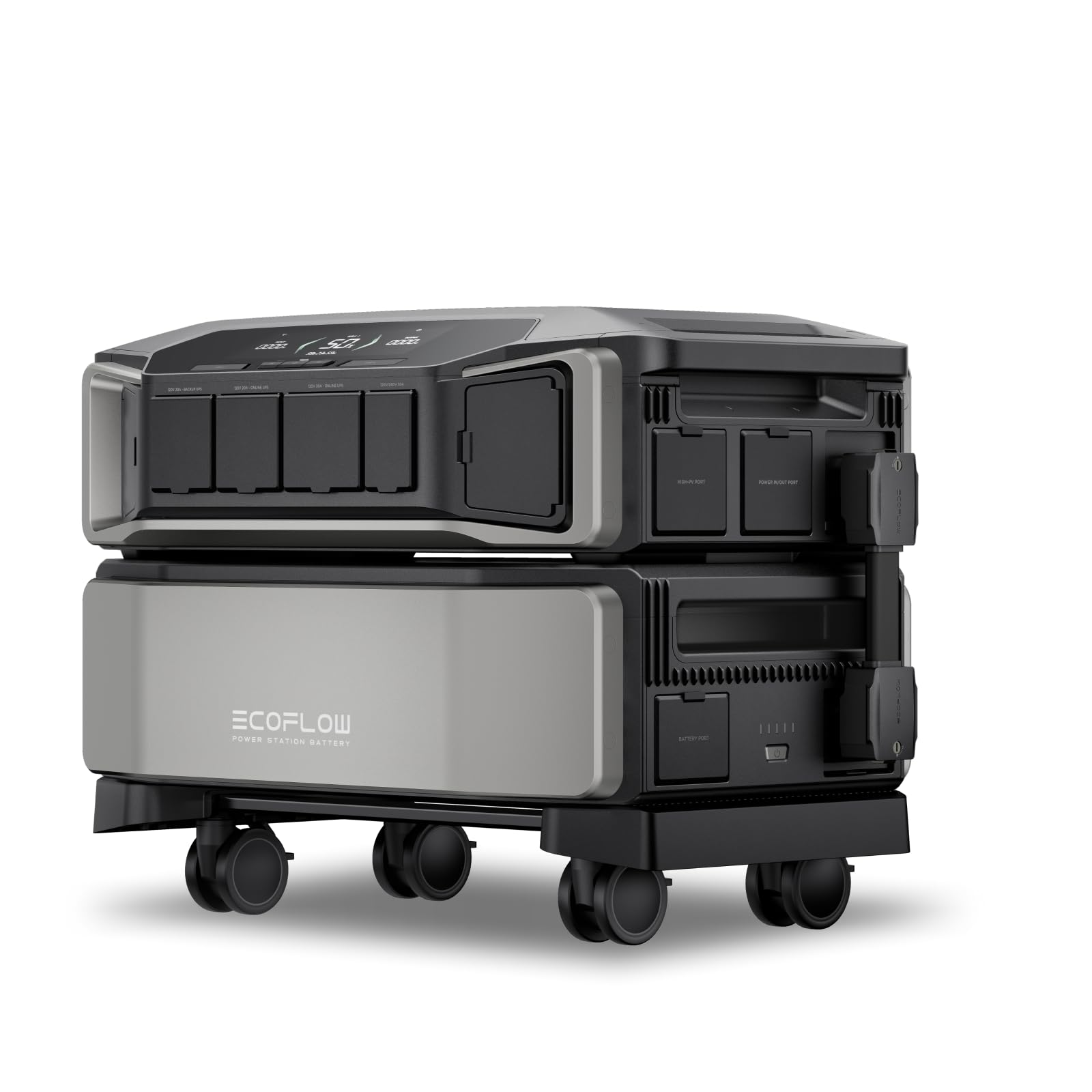
- 6,144Wh battery, 7,200W output, and 120/240V support.
- Expandable capacity up to 90kWh.
- App-based circuit prioritization and 0ms UPS mode.
Best For: Homeowners planning high-output 120/240V backup with expandable battery capacity.
VTOMAN Jump 1500X
- 828Wh station bundled with a 110W solar panel.
- 1,500W continuous AC output and three AC outlets.
- Capacity can expand to 2,376Wh with an extra battery.
Best For: Campers and RV users who want a solar panel included with 1,500W AC output.
VTOMAN Jump 600X
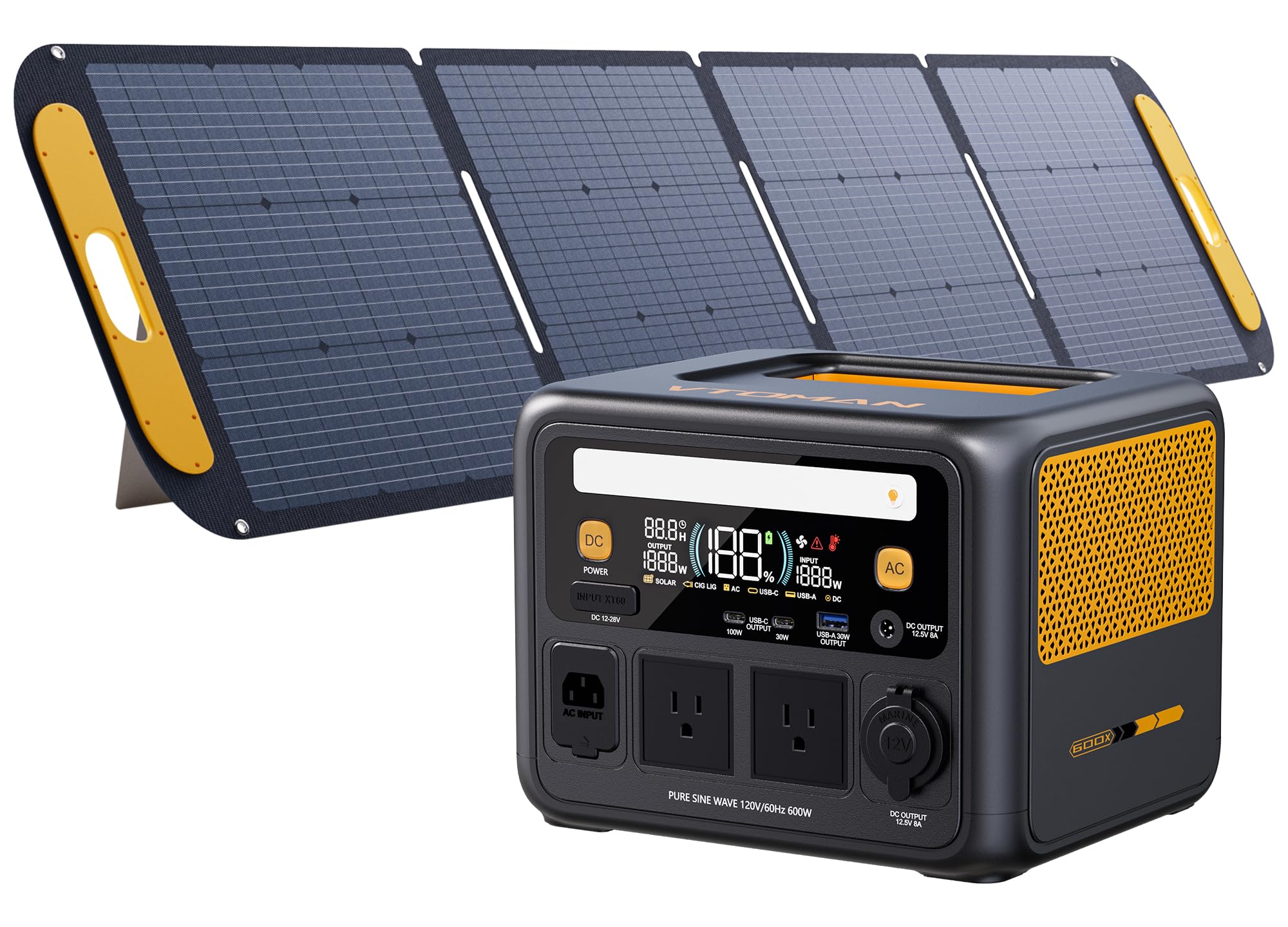
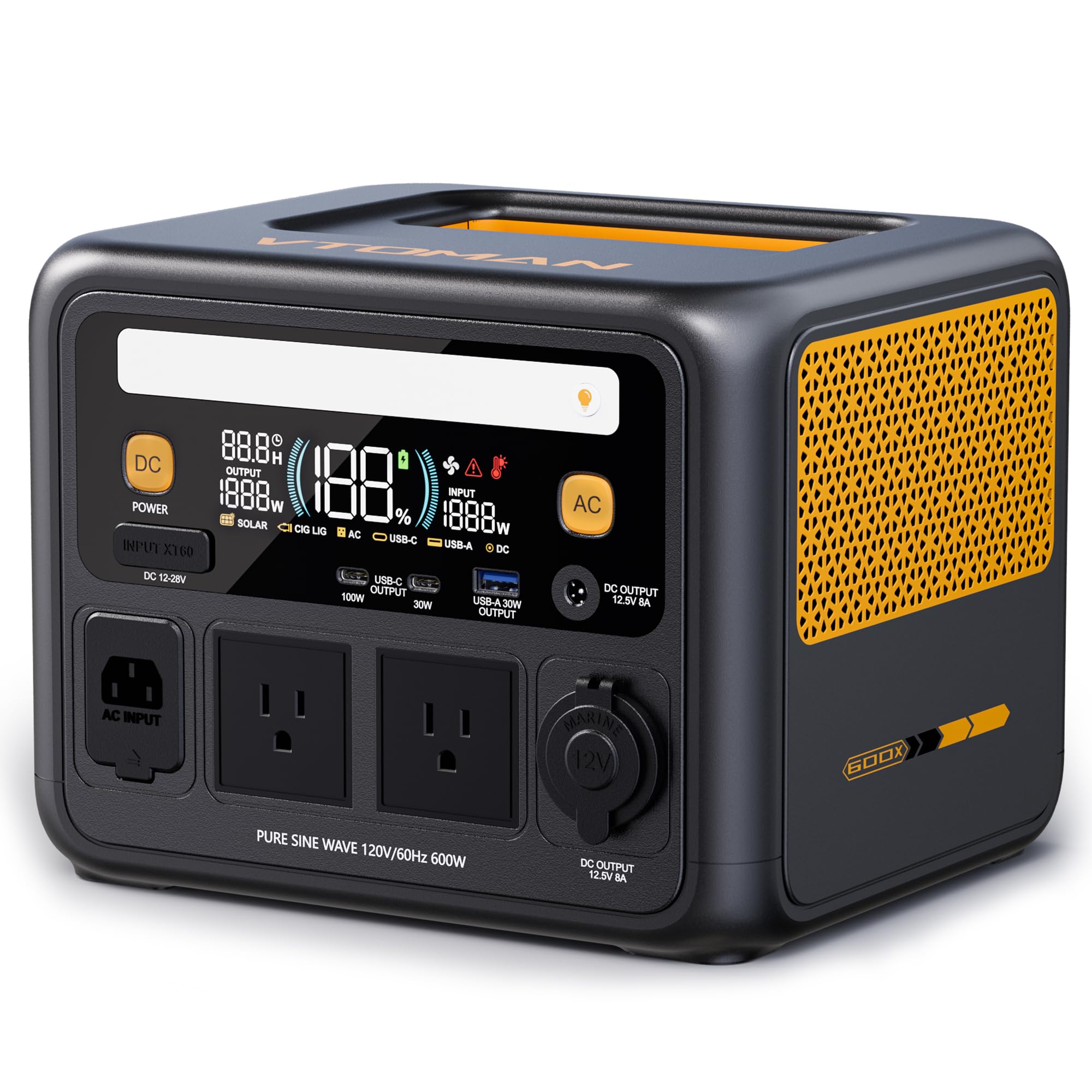
- 299Wh station bundled with a foldable 200W solar panel.
- 600W rated AC output with 1,200W surge rating.
- Car jump-start port, nine outputs, and optional capacity expansion.
Best For: Drivers and campers who want a 299Wh station with a bundled 200W panel and jump-start port.
BLUETTI Elite 30 V2
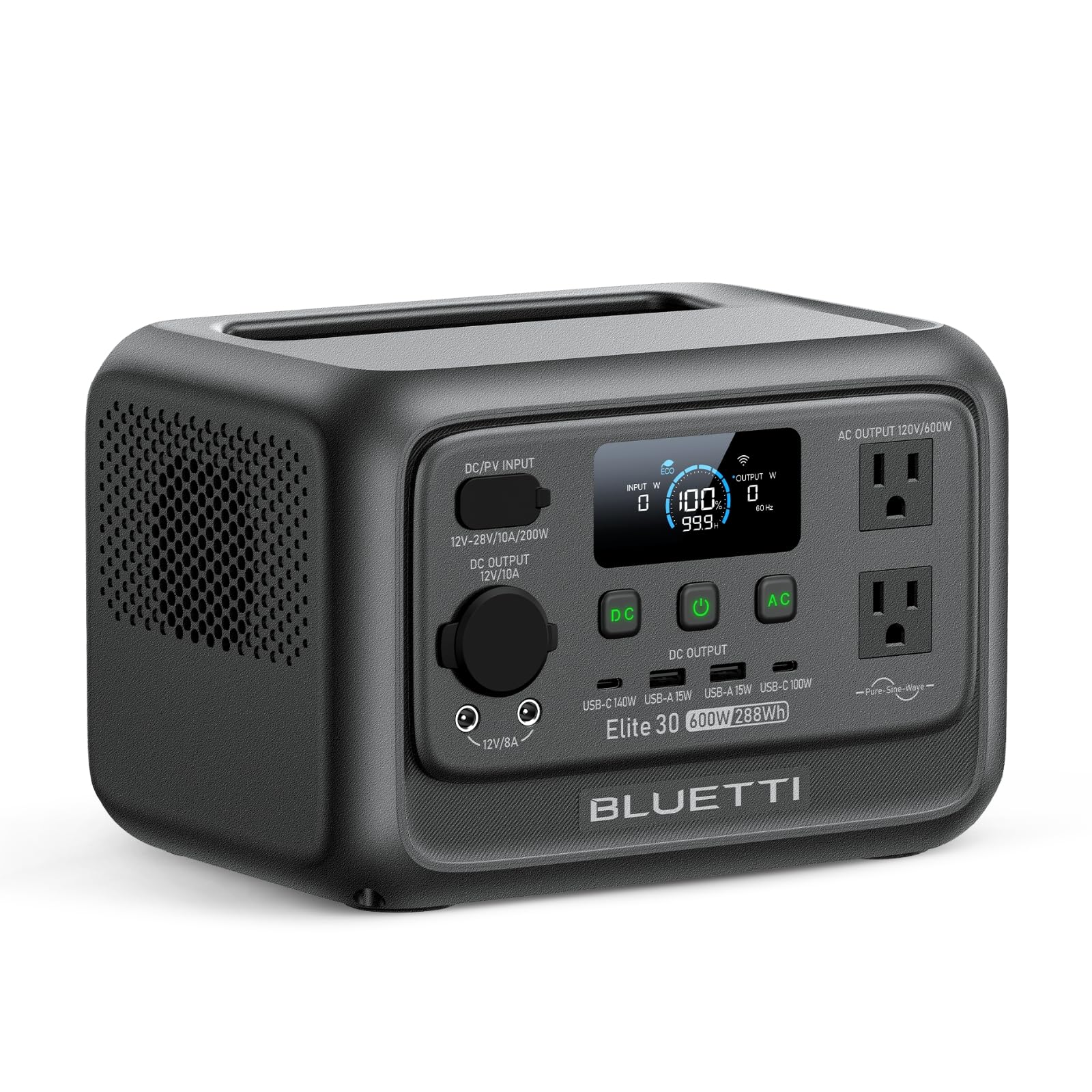
- 288Wh battery and 600W continuous output in a 9.4-pound unit.
- 45-minute AC charge to 80% and 10ms UPS.
- Supports multiple charging modes and silent operation.
Best For: Campers who want a 9.4-pound station for small devices and short backup periods.
Balanced Capacity for Camping and Outages
BLUETTI Portable Power Station AC180, 1152Wh LiFePO4 Battery Backup w/ 2 1800W (2700W peak) AC Outlets, 0-80% in 45Min, Solar Generator for Camping, Off-grid, Power Outage
The BLUETTI AC180 pairs a 1,152Wh LiFePO4 battery with 1,800W output, giving it more stored energy than the smaller travel and camping units here. Its two AC outlets and eight total outlets support several devices, while the app can raise output to 2,700W for higher-demand use.
For recharging, it supports up to 1,440W AC input and 500W solar input; the product information gives a one-hour full AC charge estimate and a 2.8–3.3-hour solar estimate. A 20ms UPS mode is also included for home essentials.
The solar panel is not included.
Best For: Campers and households that want 1,152Wh capacity with 1,800W AC output.
| Pros | Cons |
|---|---|
|
|
Choose the AC180 if you want a mid-size station that can serve both camping and household backup, with substantial AC output and a dedicated UPS mode. Its 1,152Wh capacity sits between compact units and the much larger 2,048Wh-plus models.
Check the appliances' running and startup needs, and confirm that the 20ms transfer time fits your backup use. If solar charging matters, account for a compatible panel separately.
Compact 1kWh Unit with UPS
BLUETTI Elite 100 V2 Portable Power Station for Camping 1024Wh 1800W
The BLUETTI Elite 100 V2 combines a 1,024Wh LiFePO4 battery with 1,800W rated AC output in a 25-pound, 17-liter design. Its 11 ports let it serve several devices at once, and the 10ms UPS mode is aimed at keeping equipment such as routers and PCs powered through an outage.
AC charging reaches 80% in about 45 minutes, while silent mode is rated at 30dB. The station also supports solar and vehicle charging, with BLUETTI Charger 1 needed for the faster vehicle input.
Its capacity is close to the EcoFlow DELTA 3 Classic, so portability and charging details help distinguish them.
Best For: Campers who want about 1kWh of capacity in a 25-pound station with quiet operation.
| Pros | Cons |
|---|---|
|
|
Consider the Elite 100 V2 if you want a 1kWh station that remains manageable to carry and has a fast UPS switchover. Its stated 25-pound weight and quiet mode make it a practical fit for campsites or indoor backup.
Compare it with the EcoFlow DELTA 3 Classic if charging speed and app features are priorities; confirm the included charging cables and whether you need a solar panel.
Fast-Recharging 1kWh Power
EF ECOFLOW Portable Power Station Delta 3 Classic, 1024Wh LiFePO4 Battery, 1800W AC/100W USB-C Output, 1 Hr Fast Charge, Solar Generator for Home Backup, Camping & RVs (Solar Panel Optional)
The EcoFlow DELTA 3 Classic offers a 1,024Wh LiFePO4 battery and 1,800W AC output, with 3,600W surge capacity. Its X-Boost mode is described as supporting up to 2,600W for heavier loads, while sensitive devices should be matched to the station's specified output and operating guidance.
AC charging reaches 80% in 45 minutes, and an optional 500W solar panel is given a 2.5-hour recharge estimate. The station has six outlets, 100W USB-C output, app control, and a UPS transfer time under 10ms.
This is a station-only offer, so solar charging requires a separate panel.
Best For: Users who want a 1,024Wh station with quick AC charging and app-managed backup modes.
| Pros | Cons |
|---|---|
|
|
Pick the DELTA 3 Classic if fast AC charging and app-based control matter more than having a panel included. Its 1,024Wh capacity and 1,800W output put it in the same general class as the Elite 100 V2.
Compare port needs, weight, and charging accessories before deciding. If you plan to use X-Boost, check the appliance requirements and the manufacturer's operating guidance rather than treating the boosted figure as the rated output.
Expandable-Style Capacity for RV and Backup
EF ECOFLOW Portable Power Station DELTA 3 Max, 2048Wh LiFePO4 Battery, Solar Generator (Solar Panel Optional), 3400W X-Boost Output, Ultra-Fast 0-80% Charging in 1.13 Hr, Home Backup & RV Camping
The EcoFlow DELTA 3 Max has a 2,048Wh LiFePO4 battery and an advertised 3,400W X-Boost output. That capacity is double the 1,024Wh class represented by several smaller stations here, making it a candidate for longer use between charges.
EcoFlow gives a 0–80% AC recharge time of 1.13 hours and describes under-10ms transfer for backup. App controls support energy monitoring and charging or discharging schedules.
The product information does not provide the station's weight, exact port count, or solar input limit, so check those details if you need to move it often or size a solar setup. A solar panel is optional.
Best For: RV users and households who want a 2,048Wh station with rapid AC charging.
| Pros | Cons |
|---|---|
|
|
Choose the DELTA 3 Max when the 2,048Wh capacity better matches your planned runtime than a 1kWh station. It has a fast stated recharge and a backup transfer time under 10ms, but the product details here leave weight and port count unclear.
Verify those specifications and the solar input limit for your setup. For larger household loads, compare its 3,400W X-Boost figure with a unit that specifies a higher continuous output.
Higher Output in a 2kWh-Class Station
BLUETTI Elite 200 V2 Portable Power Station, 2073.6Wh LFP Battery Backup w/ 4 2600W AC Outlets (3900W Power Lifting), 0-80% Fast Charging in 50 Min, Solar Generator for Camping, Off-grid and Emergency
The BLUETTI Elite 200 V2 combines a 2,073.6Wh LiFePO4 battery with 2,600W continuous AC output and a 3,900W power-lifting mode. Its larger capacity and output suit users comparing portable stations for heavier household or RV loads.
BLUETTI gives several charging options: Turbo mode reaches 80% in one hour, standard AC charging takes about 1.6 hours for a full charge, and a 1,000W solar setup is listed at 2.4 hours. Silent mode is rated at 16–30dB, and app controls adjust charging modes.
Check which charging accessories you need, since the listed package includes AC and solar charging cables but no panel.
Best For: Users who need a 2,073.6Wh station with 2,600W continuous AC output.
| Pros | Cons |
|---|---|
|
|
The Elite 200 V2 fits buyers seeking more output and capacity than a 1kWh-class station while retaining multiple charging options. Its 2,600W continuous rating is useful when comparing appliances, while power-lifting mode is a separate operating figure.
Check the station's dimensions and weight before planning frequent transport; those details are not provided here. If quiet operation matters, compare the stated silent-mode range with the conditions in which you expect to use it.
Quiet 3kWh-Class Backup
EF ECOFLOW Delta 3 Ultra Portable Power Station with XT60 Solar Cable, 3600W (Surge 7200W) Output Home Power, 3072Wh LiFePO4 Battery, Solar Generator for Home Use, Camping Accessories & RV Backup
The EcoFlow DELTA 3 Ultra pairs a 3,072Wh LiFePO4 battery with 3,600W continuous output and 7,200W surge. Its under-10ms UPS mode supports backup for sensitive electronics, and the product details give a 25dB noise figure under load.
It can recharge from a wall outlet, solar panels, car input, or an EcoFlow Smart Generator. This is a higher-capacity option for users who expect more than a compact station can provide, but the supplied details do not give recharge times, solar input limits, weight, or port count.
Check those specifications against your transport and charging plans before choosing it.
Best For: Households and RV users looking for a 3,072Wh battery and high AC output.
| Pros | Cons |
|---|---|
|
|
Consider the DELTA 3 Ultra if your planned loads and runtime call for a 3,072Wh battery and high continuous output. Its UPS and stated noise figure also make it relevant for home or RV backup where quiet operation matters.
Verify dimensions, weight, solar input, and recharge rates before purchase, since the supplied product details do not include them. For less demanding loads, a 1kWh or 2kWh station may be easier to carry.
Whole-Home Backup System
EF ECOFLOW DELTA Pro Ultra 6144Wh Power Station, 120/240V 7200W AC Output, Lifepo4 Home Battery Backup Expandable to 90kWh, 2H to Full Charge, Solar Generator for Home Use, Emergency, Camping, RV
The EcoFlow DELTA Pro Ultra is a home-oriented system with a 6,144Wh battery, 7,200W output, and 120/240V support. Its capacity can expand to 90kWh, and multiple inverters are described as supporting up to 21.6kW AC output.
Charging options include solar, wall outlets, EV charging equipment, and outdoor generators; the product details give a two-hour full-charge estimate for one battery. It also includes app-based circuit prioritization and a 0ms UPS mode.
At 186.4 pounds, this system is substantially heavier than the carryable stations in this roundup, so plan for a fixed or carefully selected installation location.
Best For: Homeowners planning high-output 120/240V backup with expandable battery capacity.
| Pros | Cons |
|---|---|
|
|
Choose the DELTA Pro Ultra for a home-backup plan that needs 120/240V output or substantial expansion. Its 6,144Wh starting capacity and 7,200W output place it in a different role from campsite-oriented stations.
At 186.4 pounds, it is best evaluated as a stationary system; confirm installation requirements, included components, and the costs of additional batteries or inverters. If you need power you can routinely move by hand, compare smaller stations instead.
Solar Kit with Expandable 828Wh Capacity
VTOMAN Jump 1500X Portable Power Station with 110W Solar Panel | 828Wh LiFePo4 Solar Generator Kit with 1500W Pure Sine Wave Output, Dual 100W USB-C and MPPT for Home Backup RV Camping
The VTOMAN Jump 1500X bundle includes an 828Wh LiFePO4 power station and a 110W solar panel. The station provides 1,500W continuous output through three AC outlets, with a 3,000W peak rating and two 100W USB-C ports.
Its capacity can expand to 2,376Wh with a compatible extra battery sold separately. The panel has adjustable kickstands and supports charging through the station's MPPT input.
Pass-through charging is supported, and the LCD displays battery level, input and output power, and estimated runtime. This kit is a practical fit when you want solar included, though its panel is smaller than the 200W kit paired with the Jump 600X.
Best For: Campers and RV users who want a solar panel included with 1,500W AC output.
| Pros | Cons |
|---|---|
|
|
The Jump 1500X bundle suits buyers who want a ready-to-use station and panel, with more AC output than the 600W-class units. Its 828Wh capacity and optional expansion provide a middle ground between compact and 2kWh systems.
Compare the included 110W panel with your expected recharge needs, since panel output affects solar charging time. Confirm the extra battery is compatible and budgeted separately if you need longer runtime.
Solar Bundle with Car Jump-Start Port
VTOMAN Jump 600X Portable Power Station with 200W Solar Panel, 299Wh Solar Generator with 600W AC Outlets (Surge 1200W) for Outdoor Camping, Vehicle Emergency, Electric Backup, RV, Power Outages
The VTOMAN Jump 600X pairs a 299Wh LiFePO4 station with a foldable 200W solar panel and a car jump-start port. Its rated AC output is 600W, with a 1,200W surge rating, and it has nine output ports for multiple devices.
Capacity can expand to 939Wh with a separate Jump 600X extra battery. The USB-C port supports up to 60W, and the station supports pass-through charging.
The panel is rated at up to 23% conversion efficiency. Jumper cables are sold separately, so the jump-start feature requires an additional purchase.
Its lower capacity makes it more suitable for smaller loads than the 828Wh or 1kWh stations.
Best For: Drivers and campers who want a 299Wh station with a bundled 200W panel and jump-start port.
| Pros | Cons |
|---|---|
|
|
Choose the Jump 600X if the bundled solar panel and jump-start port fit your travel needs. The 299Wh capacity is suited to smaller loads and shorter use than the 828Wh and 1kWh choices.
Check whether your vehicle needs separate jumper cables and whether 600W rated output is enough for your AC devices. If longer runtime is the priority, compare the price and compatibility of the optional expansion battery.
Lightweight 288Wh Station with UPS
BLUETTI Elite 30 V2 Portable Power Station 600W (Power Lifting 1500W), 288Wh LiFePO4 Battery with 10ms UPS, Emergency Backup Power for Home Blackout/Winter Storm, Solar Generator for Camping/Road Trip
The BLUETTI Elite 30 V2 weighs 9.4 pounds and stores 288Wh, making it one of the more portable conventional power stations in this selection. It provides 600W continuous output and a 1,500W power-lifting mode, with support for up to eight charging modes.
AC charging reaches 80% in 45 minutes, and its 10ms UPS mode targets devices such as laptops and routers. BLUETTI gives standby consumption as 4.5W and silent mode as 30dB.
Solar charging requires a compatible panel, and the listed package includes AC and car charging cables. Its capacity is better matched to smaller electronics than extended appliance backup.
Best For: Campers who want a 9.4-pound station for small devices and short backup periods.
| Pros | Cons |
|---|---|
|
|
Consider the Elite 30 V2 when carrying weight matters and your loads are modest. Its 288Wh battery is much smaller than the 1kWh stations, but it adds a 10ms UPS and higher rated output than pocket-size units.
Check your appliance's running and startup requirements, particularly if relying on power-lifting mode. For more runtime between charges, a larger station will be a better fit even if it weighs more.
How to Choose Portable Power Stations
How We Picked Portable Power Stations
This selection covers distinct jobs, from charging small electronics on a trip to running larger loads during a home outage. We considered battery capacity, rated AC output, surge or boosted output where provided, charging methods, port options, portability details, and whether a solar panel comes in the box.
Standalone stations and a whole-home backup system represent different levels of portability, while the VTOMAN bundles add panels for buyers who want solar hardware included.
Capacity and output answer different questions. Watt-hours help estimate how long a station can supply energy, while watts indicate the load it can support at a given time.
The 288Wh and 299Wh options suit shorter sessions and smaller devices; 1kWh-class stations offer more stored energy; and the 2kWh to 6kWh models target heavier or longer backup needs. Actual runtime varies with the connected load and system losses.
Comparing Portable Power Stations
For a balance of camping and outage use, compare the BLUETTI AC180 and the 1,024Wh EcoFlow DELTA 3 Classic or BLUETTI Elite 100 V2. The AC180 has 1,152Wh and 1,800W output, while the two 1,024Wh models emphasize fast AC charging and UPS features.
The DELTA 3 Max and Elite 200 V2 roughly double that capacity; the EcoFlow DELTA 3 Ultra increases it to 3,072Wh with 3,600W continuous output.
The DELTA Pro Ultra is a separate category: a 186.4-pound home system with 120/240V support and expansion potential. For solar, distinguish a station that supports panel input from a bundle that includes one.
The Jump 600X includes a 200W panel, while the Jump 1500X includes a 110W panel. Neither bundle includes the optional expansion battery, and the Jump 600X also requires separately purchased jumper cables for its jump-start port.
| Product | Standout features | Best for |
|---|---|---|
| BLUETTI AC180Check Price |
| Campers and households that want 1,152Wh capacity with 1,800W AC output. |
| BLUETTI Elite 100 V2Check Price |
| Campers who want about 1kWh of capacity in a 25-pound station with quiet operation. |
| EcoFlow DELTA 3 ClassicCheck Price |
| Users who want a 1,024Wh station with quick AC charging and app-managed backup modes. |
| EcoFlow DELTA 3 MaxCheck Price |
| RV users and households who want a 2,048Wh station with rapid AC charging. |
| BLUETTI Elite 200 V2Check Price |
| Users who need a 2,073.6Wh station with 2,600W continuous AC output. |
| EcoFlow DELTA 3 UltraCheck Price |
| Households and RV users looking for a 3,072Wh battery and high AC output. |
| EcoFlow DELTA Pro UltraCheck Price |
| Homeowners planning high-output 120/240V backup with expandable battery capacity. |
| VTOMAN Jump 1500XCheck Price |
| Campers and RV users who want a solar panel included with 1,500W AC output. |
| VTOMAN Jump 600XCheck Price |
| Drivers and campers who want a 299Wh station with a bundled 200W panel and jump-start port. |
| BLUETTI Elite 30 V2Check Price |
| Campers who want a 9.4-pound station for small devices and short backup periods. |
Choosing Capacity and AC Output
List the devices you plan to run, then check their wattage and whether motors or compressors need a higher startup draw. Compare that with the station's continuous output and any surge rating.
Boost or power-lifting modes have separate limits and conditions; do not treat their maximum figures as the normal rated output. For instance, the Elite 200 V2 specifies 2,600W continuous output and a 3,900W power-lifting mode, while the AC180's app-enabled boost is rated at 2,700W.
Next, estimate how many hours you need to run those devices. A 288Wh station is easier to move than a 2,048Wh station, but it stores much less energy.
Add a reserve for conversion losses and avoid assuming a device will run for the battery's full watt-hour figure divided by its rated watts. Check the power station's operating guidance for appliance compatibility.
Solar, Wall, and Vehicle Recharging
A solar panel's wattage and the station's solar input limit both affect recharge planning. The VTOMAN bundles make panel choice simple at checkout, but the included panel ratings differ: 200W for the Jump 600X and 110W for the Jump 1500X.
The DELTA 3 Classic supports a separately purchased 500W panel, and the Elite 200 V2's product details give a 1,000W solar charging configuration. Sunlight, panel angle, and conditions affect actual charging.
Fast wall charging can matter if you often recharge between trips or ahead of an expected outage. The Elite 100 V2 and DELTA 3 Classic both give a 45-minute estimate to 80%; larger stations provide different charge times and modes.
For vehicle charging, confirm which cable or separate charger is required. The Elite 100 V2's faster vehicle option needs BLUETTI Charger 1, while some bundles ship in separate packages.
Which Portable Power Station Fits Your Use?
For backpacking or short trips with small electronics, consider a compact 288Wh unit such as the Elite 30 V2 and verify that its weight and capacity fit the outing. For a flexible campsite and home backup station, compare the 1kWh models by port layout, charging speed, UPS transfer time, and weight.
The AC180 is a reasonable middle step when you want a little more capacity and 500W solar input.
For higher-demand appliances or longer outages, compare the Elite 200 V2, DELTA 3 Max, and DELTA 3 Ultra by continuous output, capacity, charging options, and dimensions. Choose the DELTA Pro Ultra when a stationary 120/240V home system and expansion matter more than carrying the station.
Before buying, confirm connector compatibility, included cables, panel requirements, and the rated wattage of every device you plan to power.